Understanding Mom Overwhelm: Causes, Triggers, and Practical Tools

Why Overwhelm Happens
Feeling constantly stretched, mentally exhausted, caught up in behavior you wish you could control—or at least understand and maybe do a little less often (like snapping, yelling, taking absolutely everything personally, defaulting to people-pleasing, self-doubting... honestly, the list writes itself). If you’re emotionally wiped from riding this roller coaster, you’re definitely not alone. Overwhelm isn’t some secret shame; it’s a predictable outcome of invisible mental loads, not-enough support (ahem, “it takes a village,” but which village exactly?), endless emotional and physical demands, and society’s favorite pastime: judging moms. (Hi, Insta-perfect homes, ten-hobby kids, and gourmet lunchboxes.)
The first step toward actual calm isn’t pretending you’re immune to overwhelm—it’s learning where it comes from and how it ambushes your everyday life.
1. Let’s Normalize the Feeling: Overwhelm Is COMMON, REAL, & Definitely Not Your Fault
Overwhelm isn’t a rare mom-flu; it’s completely natural, given the daily circus. Many mothers are running a mental triathlon that doesn’t get medals—just more laundry.
Mental Load: You know that “resting” feeling while you’re mentally meal-planning, tracking doctor’s appointments, and remembering which child hates which vegetable? That’s cognitive cardio.
Emotional Labor: You’re basically the family’s emotional thermostat—expected to keep everyone cozy, never overheat, and definitely not lose power.
Decision Fatigue: Sure, choosing between taking the toddler for a walk or finally sneaking in some creative time shouldn’t feel like a board meeting—but after making a thousand tiny decisions every day, even that one can fry your circuits.
Bottom line: Your overwhelm isn’t just “in your head.” It’s a normal reaction to running a household in hard mode.
2. Common Root Causes of Mom Overwhelm
A) Unrealistic Expectations
I once read Dr. Shefali’s book, The Parenting Map, where she points out that almost every parent wants their kid to be two things: 1) happy, and 2) successful. But what do those even mean these days? “Happy” seems to be social media code for always smiling—because nothing gets more likes than a perfectly filtered grin. “Success”? That’s a moving target too: not just money or fancy degrees, but…well, whatever your neighbor just posted about on LinkedIn.
What if, instead, we swapped this whole “happy and successful” pressure for something less exhausting? Like, maybe we want kids who are present, curious, and capable of feeling a full spectrum of emotions—even the messier ones. (Honestly, that’s another topic for another day, but consider it your free radical reframe.)
Back to overwhelm: Let’s lay out the main root causes—
The “Supermom” Ideal: Apparently, you’re supposed to have a Pinterest-ready home, run a side hustle, raise photogenic kids in matching hats, and chug adaptogenic smoothies—while never looking tired. Piece of cake, right?
Social Media Comparison: If only there were a filter for guilt and exhaustion. Comparing your (very human) day-to-day to someone else’s highlight reel? Absolutely rigged game.
Internalized Pressure: Between inherited family roles, cultural perfectionism, and the ghost of “good moms never rest”—no wonder we agonize over the idea of a solo weekend away. Seriously, I know moms who haven’t taken a night off in three years. At what point does “attachment parenting” tip over into total boundary erasure? (Spoiler: moms need space too.)
Then there also are...
B) Insufficient Support & Resources
Isolation: Raising kids solo (no village in sight) cranks up pressure and loneliness.
Unequal Labor Split: Reminder: “partner” isn’t supposed to mean “extra child to manage.”
No Breaks: The only true constant? Coffee, and not getting enough actual rest.
Financial Strain: Because, apparently, dance lessons and dental visits don’t pay for themselves.
Also not to be underestimated are...
C) Physical & Biological Factors
Sleep Deprivation: You’re not “moody”—you’re running on backup batteries.
Hormonal Changes: Pregnancy, postpartum, PMS… It’s a fun hormonal rollercoaster that doesn’t hand out barf bags.
Sensory Overload: If one more person yells “Mom!”… well, nervous system overstimulation is a feature, not a bug.
3. Everyday Habits That Secretly Fuel Overwhelm
Some ordinary routines—often done on autopilot—can unintentionally increase stress and wear down your nervous system. Here’s how:
Reaching for your phone constantly or being online 24/7:
Activates dopamine-seeking loops in the brain, increasing nervous system stimulation and making true rest elusive.
Moving too fast to notice your surroundings:
Keeps your brain stuck in task mode and hypervigilant, never letting the mind or body settle.
Holding in feelings and unprocessed stress:
Triggers the freeze response. When emotions go unexpressed, they get stuck in the body and accumulate over time.
Packing your schedule with no time for rest or reflection:
Leads to chronic stress and keeps your sympathetic nervous system in overdrive.
Rushing to get somewhere at the last minute:
Lowers your threshold for stress, activating fight or freeze responses and draining your energy reserves.
Spending time with people who drain your energy:
Can trigger the fawn response—over-focusing on keeping others comfortable, which erodes your own emotional safety.
Getting poor sleep (less than six hours, or inconsistent):
Directly disrupts your body’s ability to shift into the parasympathetic “rest and digest” state, making it harder to recover from daily stress.
Even small, repeated actions matter. Over time, these patterns can accumulate, leaving you feeling depleted and overwhelmed—often without realizing why.
4. Practical Tools to Tame Overwhelm
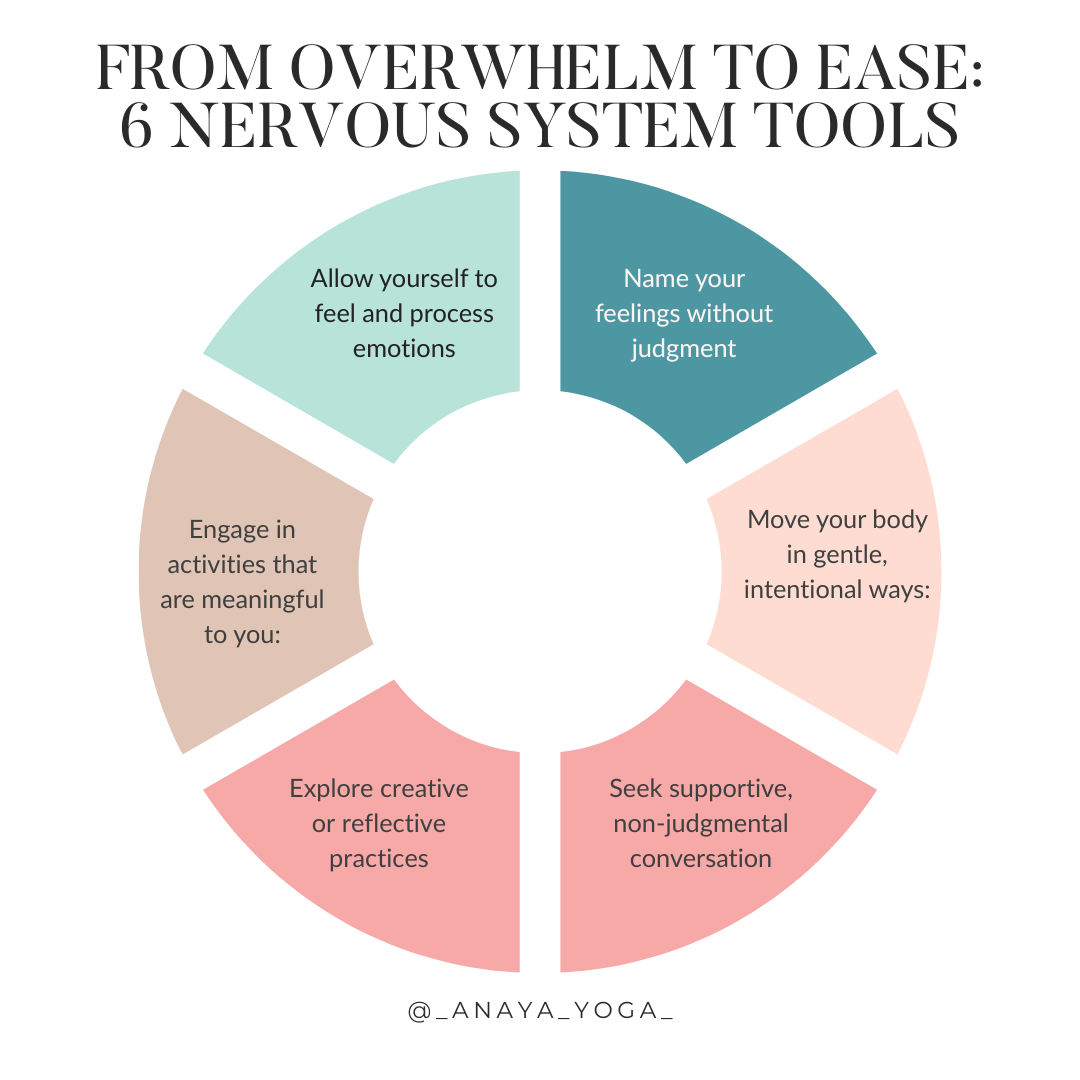
Overcoming overwhelm isn’t about simply “pushing through” or waiting for rest to solve everything. Purposeful, active steps can help your mind and body begin to recalibrate.
Name your feelings without judgment:
Increasing emotional awareness allows you to identify what you’re experiencing, rather than letting it build up unnoticed.Allow yourself to feel and process emotions:
Whether it’s sadness, frustration, or even laughter, expressing your emotional state helps prevent stress from accumulating in the nervous system.Move your body in gentle, intentional ways:
Regular movement—such as walking, stretching, or yoga—can reduce physical tension and signal safety to your brain and body.Engage in activities that are meaningful to you:
Prioritize activities that bring you joy, safety, creativity and a sense of purpose or fulfillment, rather than focusing solely on productivity.Seek supportive, non-judgmental conversation:
Talking with someone who can truly listen (without immediately giving advice) helps you feel seen and understood.Explore creative or reflective practices:
Journaling, coloring, or other mindful hobbies can support self-regulation and encourage your nervous system to relax.
Building these practices into everyday life can gradually restore a sense of balance and resilience. Small, consistent actions send powerful signals of safety and support to both your mind and body.
Move from Overwhelm to Calm: Get Your Free RAIN Meditation and Journaling Prompts for Emotional Empowerment
Emotions are messengers, not enemies. When you learn to listen—rather than suppress—you reclaim your power to respond with wisdom.
Inside this free two-part resource, you’ll receive:
• A guided RAIN meditation—a gentle, evidence-based practice for recognizing, allowing, and investigating emotions so you can access calm and self-acceptance, even in the messiest moments.
• Six powerful journaling prompts—thoughtfully crafted to help you clarify and explore feelings most of us were never shown how to handle (I certainly wasn’t). These prompts are here for you, especially on days when putting emotions into words feels impossible.
This is your supportive pause—a way to care for your emotional well-being, with no guilt or pressure attached. Whatever you’re feeling, you’re not alone, and you’re more capable than you know.
Ready to move from overwhelm to self-compassion? Enter your email to receive your free RAIN meditation and journaling prompts now.
Thank you for subscribing!
Have a great day!